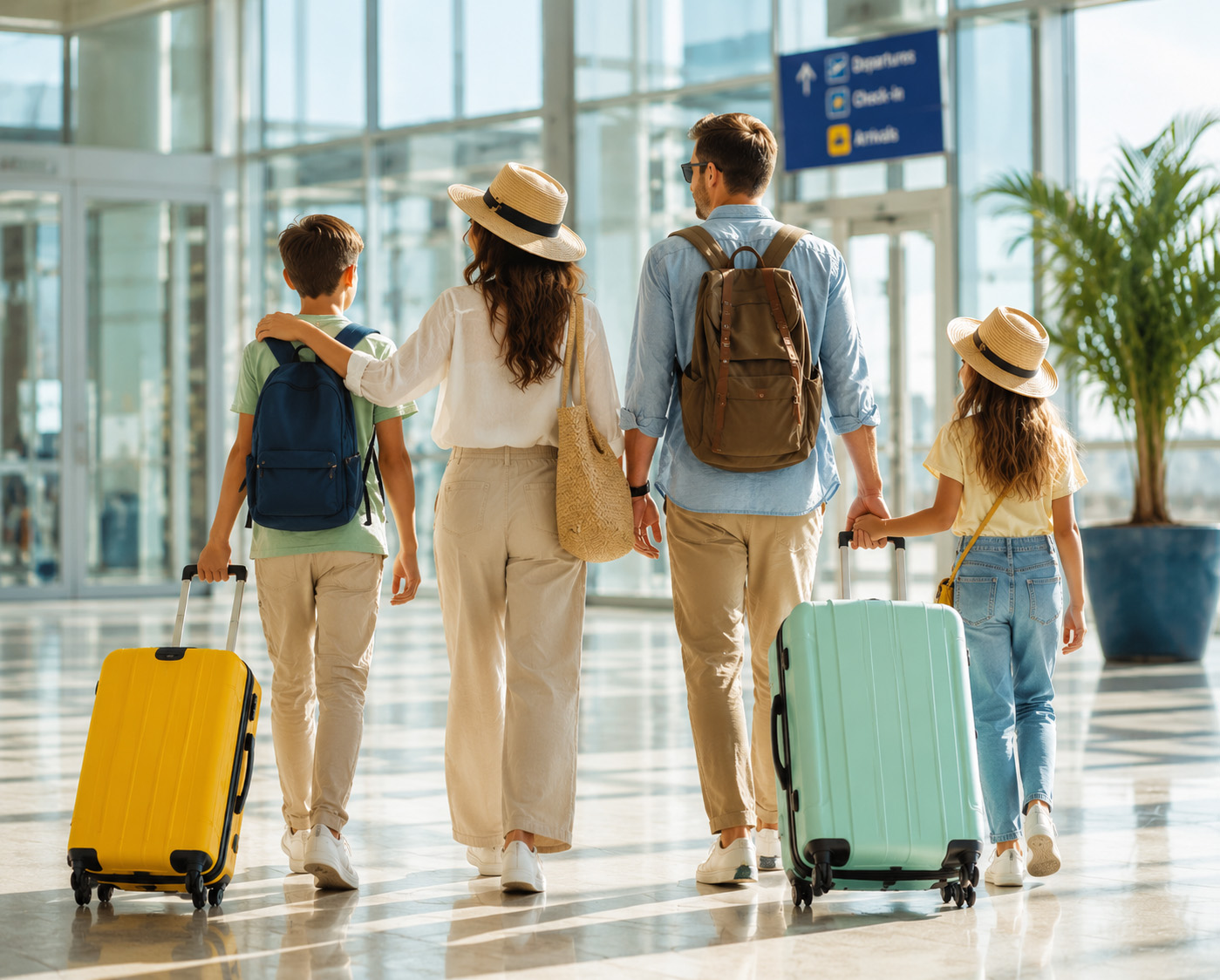
Over the next few weeks, airports around the world will fill with expatriate families heading “home.”
Some will return for a few weeks to visit grandparents, reconnect with old friends, and enjoy familiar foods. Others will be making a more permanent move, closing one chapter of their lives and beginning another after years abroad.
For many, this return has been anticipated for months. Sometimes years.
And yet, after almost thirty years living outside my country of birth, I have learned something that continues to surprise both my clients and myself:
Going home is not always easy.
In fact, sometimes it is harder than leaving.
I remember the first time I experienced this feeling. I had returned to a place that should have felt familiar. The streets were familiar. The language was familiar. The people around me shared my childhood history.
Yet something felt off.
It wasn’t dramatic. It was more subtle than that.
A feeling that I no longer fit quite as naturally into a place I once called home.
Over the years, I have heard countless variations of the same story from expatriates living in Asia, Europe, the Middle East, and North America.
“I don’t understand. I was so excited to come back.”
“I feel guilty saying this, but I miss my life overseas.”
“I thought I was homesick for home. Now I’m not so sure.”
As psychologists, we often call this reverse culture shock. Personally, I think the term makes it sound far more clinical than it actually feels.
For most people, it feels more like confusion.
Why doesn’t home feel the way I expected?
The Home We Return to Exists Mostly in Memory
One thing I have come to appreciate is that we rarely return to the place we left.
We return to a new version of it.
Life has continued while we were away.
Friends have changed jobs, married, divorced, had children, moved cities, developed new priorities.
Parents have aged.
Neighborhoods have evolved.
Sometimes even our favorite café has disappeared.
But perhaps the biggest change is us.
Living abroad changes people.
I was born in Argentina and have since lived in the United States, Canada, France, India, Vietnam, China, Singapore, and now Spain. Each country left something behind. A different way of seeing the world. A different understanding of relationships, identity, and belonging.
After enough years abroad, returning home can feel a little like visiting a place that belongs both to you and to someone else.
Sometimes We Return to Old Family Stories
This is the part that I rarely see discussed in articles about reverse culture shock.
Sometimes we are not simply returning to a country.
We are returning to family dynamics.
To old expectations.
To relationships that may have remained unresolved.
Living abroad creates distance. Occasionally, that distance allows certain tensions to remain comfortably in the background.
Then we come home.
The parent who still sees us as the child who left.
The sibling conflict that was never fully addressed.
The family expectations that were easier to manage from ten thousand kilometres away.
One client said something to me years ago that I have never forgotten:
“I thought I was moving back to my country. I didn’t realize I was also moving back into unfinished conversations.”
That sentence captures something important.
For some expatriates, the challenge is not adapting to a country. It is confronting realities that distance temporarily softened.
The Loss That Nobody Expects
Another surprise is the grief.
Not grief for a person, but grief for a life.
Many expatriates spend years building meaningful lives abroad. They develop friendships that feel like family. They create routines. They build communities.
Then one day they leave.
What surprises people is how deeply they miss things they once took for granted.
The local coffee shop.
The colleagues who became close friends.
The international school community.
The feeling of belonging to a group of people who understood what it meant to live between cultures.
I often remind clients that gratitude and grief can coexist.
You can be excited about returning home and still miss the life you left behind.
The two experiences are not contradictory.
They are part of being human.
Signs You May Be Experiencing Reverse Culture Shock
You may notice:
- Feeling unexpectedly emotional after returning home
- Missing your host country more than expected
- Feeling disconnected from old friends
- Comparing everything to life abroad
- Feeling frustrated by aspects of your home culture
- Wondering where you truly belong
- Feeling guilty for not being happier
If this sounds familiar, you are not alone.
In fact, it is often a sign that your experience abroad mattered more than you realized.
What Helps?
The people who adapt most successfully are usually not those who try to recreate their old lives.
They are the ones who allow themselves to build something new.
A few reminders I often share with clients:
- Give yourself permission to miss what you left behind.
- Accept that home may not feel exactly as you remembered it.
- Stay connected to the parts of yourself that developed abroad.
- Be patient with family relationships and changing roles.
- Remember that adjustment takes time.
Most importantly, be kind to yourself.
A Final Reflection
After three decades abroad, I am no longer convinced that home is a place.
I think home is something we carry with us.
A collection of relationships, memories, languages, experiences, and identities gathered across different chapters of life.
Perhaps that is why returning home can feel so complicated.
We are not simply returning to where we came from.
We are trying to integrate who we were, who we became, and who we are becoming.
And maybe that is the real work of expatriate life.